ByJohn A
The Benefits of Cloud-Based Collaboration Platforms
Cloud-based collaboration platforms centralize documents, tasks, and conversations to streamline workflows. Real-time updates enable cross-functional visibility and reduce handoffs. Strong security, governance, and compliance foundations support data privacy and breach notifications. Modular, scalable workflows preserve context across departments and enable auditable progress. While dashboards standardize processes and roles, choosing the right platform hinges on governance needs, integration depth, and how teams sustain momentum as contracts, data residency, and governance evolve.
What Cloud Collaboration Platforms Do for Teams
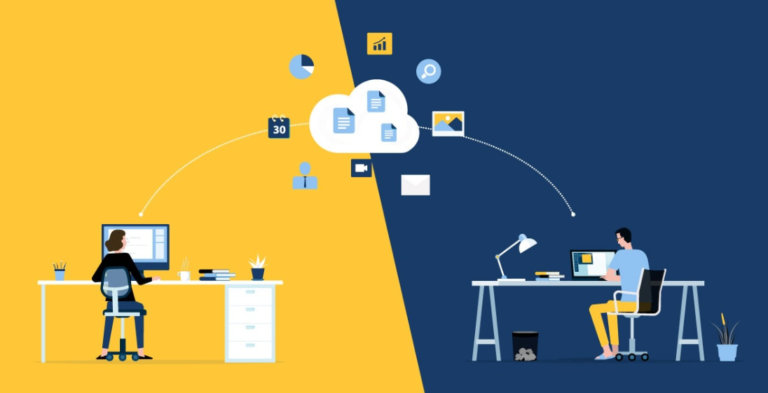
Cloud collaboration platforms enable teams to work from diverse locations as a unified unit. They centralize documents, tasks, and conversations, enabling streamlined cloud workflow and standardized processes. Cross functional alignment emerges through shared dashboards, transparent role definitions, and real-time updates. Decisions accelerate as version control and audit trails reduce ambiguity, while automation sustains momentum without micromanagement, preserving autonomy and focused execution.
How Real-Time Collaboration Boosts Productivity
Real-time collaboration directly amplifies productivity by syncing team actions, aligning priorities, and accelerating decision cycles across distributed workstreams. It enhances real time throughput by reducing handoffs and latency, enabling synchronized contributions without meetings.
Collaborative workflows emerge as modular, interoperable processes that preserve context, support asynchronous participation, and scale across departments, boosting throughput, accountability, and timely deliverables in dynamic environments.
Security, Privacy, and Compliance You Can Trust
Security, privacy, and compliance are foundational pillars for cloud-based collaboration platforms. The approach emphasizes data security and user privacy through encryption, access controls, and robust audit trails. Governance policies enforce data residency, retention, and consent management, while continuous monitoring detects anomalies in real time. Transparent breach.notification protocols and compliance attestations provide trust without sacrificing productivity or freedom.
Choosing the Right Platform for Your Team
Choosing the right platform begins with aligning features to team needs and workflows. Decision-makers assess collaboration scope, integration ecosystems, and governance requirements, prioritizing scalability and reliability. Informed comparisons reveal privacy controls and access models, ensuring data sovereignty and auditability. Clear onboarding tips accelerate adoption, while modular tools enable freedom to customize processes without vendor lock-in. Strategic selection balances control with agility for resilient, autonomous teams.
Frequently Asked Questions
How Do Cloud Platforms Handle Offline Access?
Cloud platforms provide offline access through local caches and service workers, enabling continued work; synchronization strategy reconciles edits upon reconnect, prioritizing conflict resolution, versioning, and secure sync queues to preserve data integrity and user autonomy.
What Are Hidden Costs of Cloud Collaboration Tools?
Exaggerated, hidden costs lurk beyond quoted fees, inflating budgets through unseen licenses, maintenance, and tier migrations. The analysis identifies operational friction, renegotiation risk, and compliance overhead, guiding strategic, freedom-seeking stakeholders to anticipate total cost of ownership and control.
Can Platforms Scale for Large Enterprises Seamlessly?
Large enterprise scalability is achievable, though platform architecture challenges must be managed proactively; robust modular design, elastic resources, and clear governance enable seamless growth while preserving performance, security, and autonomy for teams demanding freedom.
How Is Data Ownership Determined Across Platforms?
A hypothetical multinational uses a shared-data contract to clarify data ownership and access rules; data ownership rests with the entity that created the content, while platform transparency governs logging, rights, and deletion obligations across services.
Do Tools Support Multi-Language Teams and Localization?
Tools generally provide multilingual support and localization features, enabling teams to collaborate across regions. This supports localization effectiveness by offering translated UI, cultural adaptations, and context-aware content, while preserving performance, governance, and freedom to work autonomously.
Conclusion
In the silent loom of work, cloud platforms thread collaboration into a shared fabric. Real-time threads bind diverse hues into cohesive patterns, while security locks and audit trails map the edges of trust. The dashboard becomes a compass, guiding cross-functional crews through complex terrain with clarity. As policies guard the inner sanctum, teams move as one, resilient and scalable, turning scattered inputs into a unified signal—efficient, secure, and perpetually aligned.